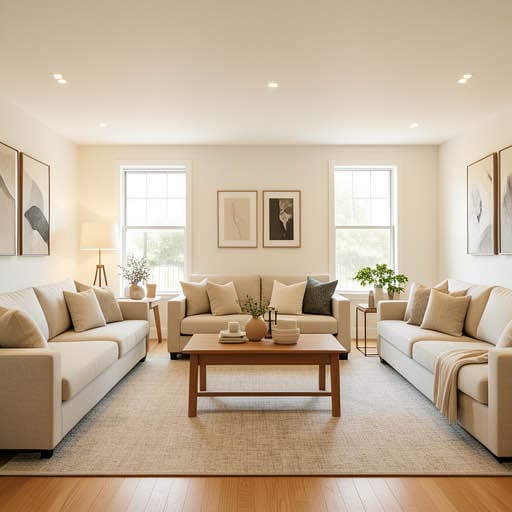
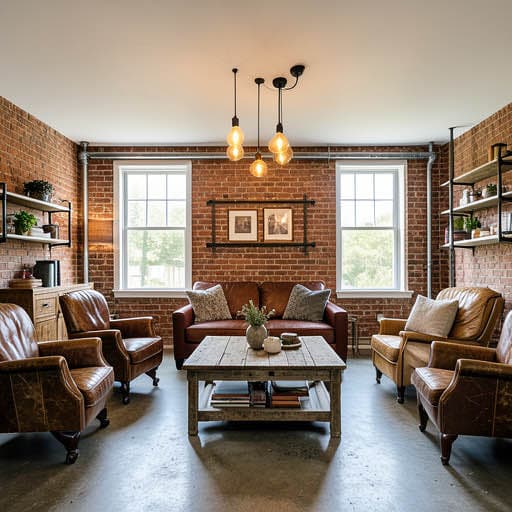
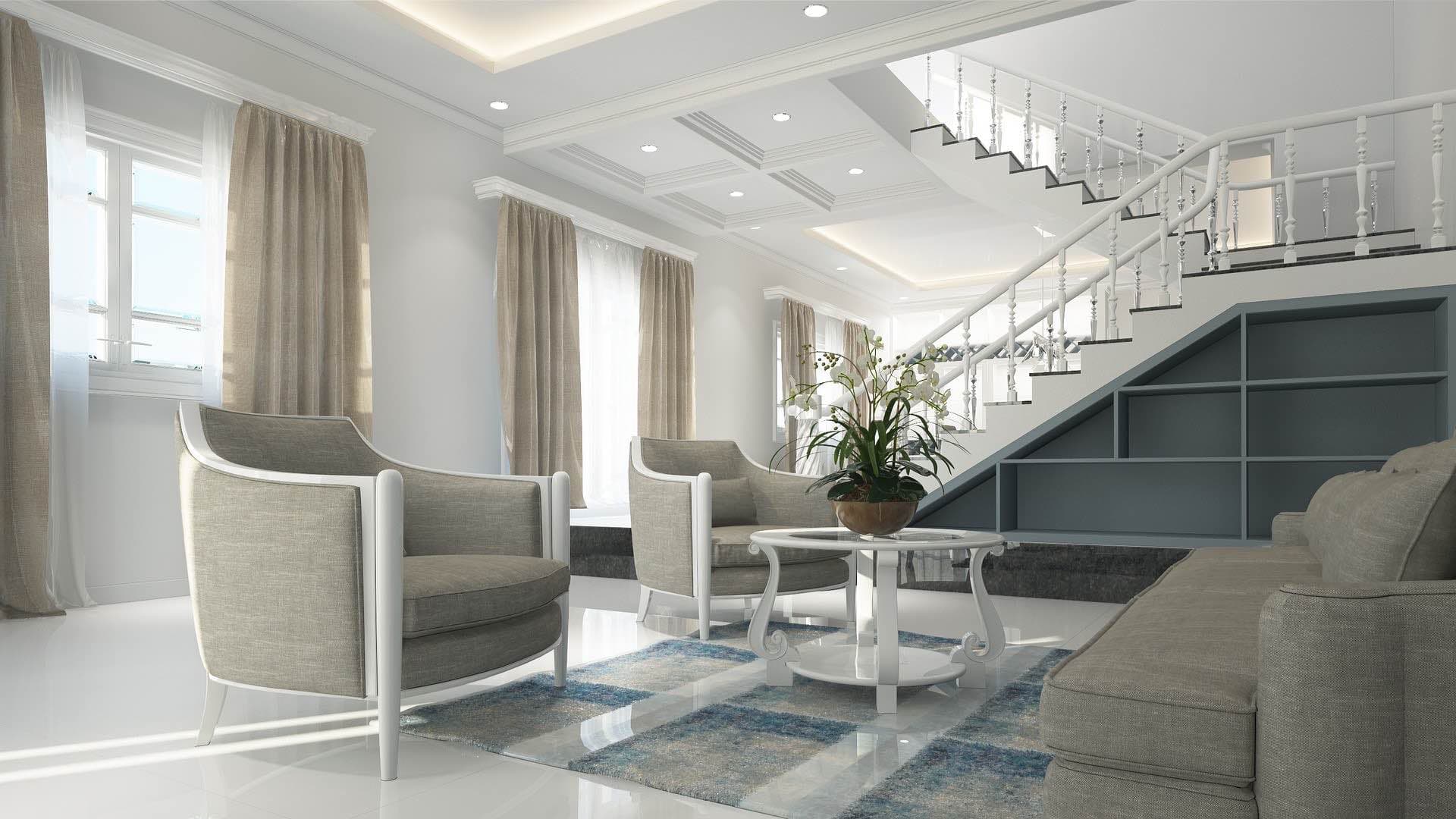
Before & After: a 480 sq ft Brooklyn studio, four ways
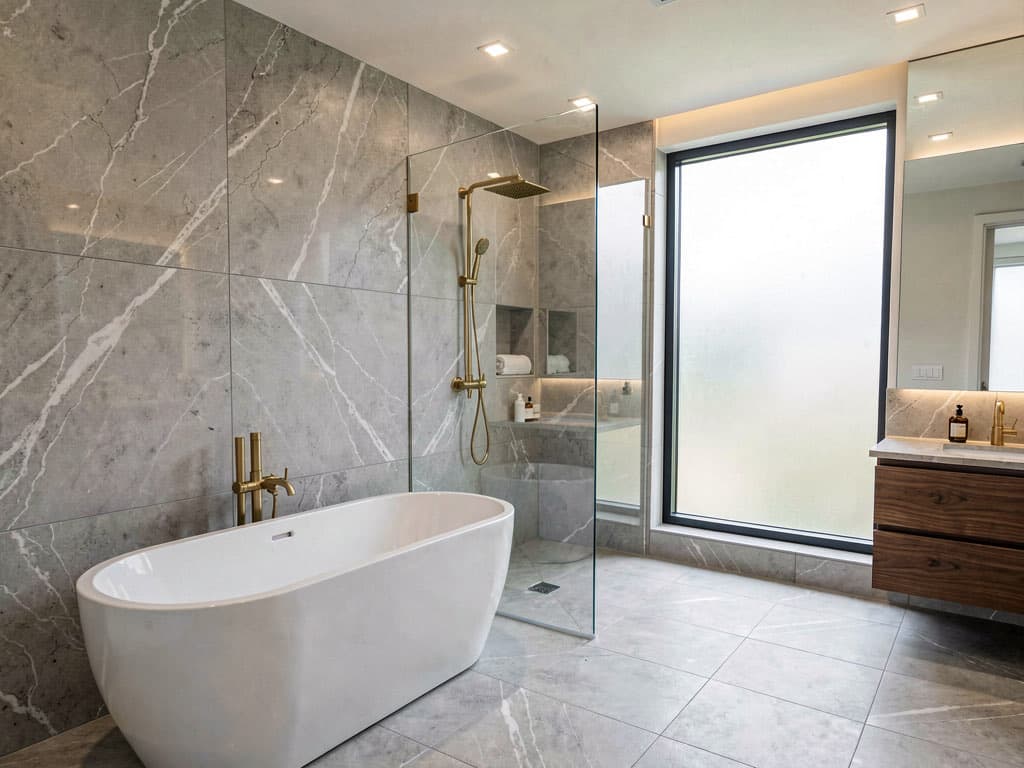
A 480 sq ft Brooklyn studio. Four design directions tested in 12 minutes. Same room, same furniture, same camera angle. Renovation AI ran the variations. Total final budget: $2,200 across paint, rug, sofa, and side tables — preserved by the AI preview from being $4,500 spent on the wrong direction. 3 free designs included.
What this saves vs picking the wrong style direction
The numbers that matter for small-apartment redesigns in 2026:
- Average cost to outfit a 400-500 sq ft studio: $3,500-$8,000
- Cost of choosing wrong: $1,500-$4,500 in non-returnable furniture
- Cost of contractor-quality design service: $1,500-$5,000 per room
- Cost in Renovation AI: $0 for 3 free designs
- Time to test 4 directions in Renovation AI: 12 minutes
- Final budget after AI preview decision: $2,200 in this case study
The biggest small-apartment risk is buying furniture that fits a style that doesn't fit your room. AI preview prevents the 30% of furniture spend that gets returned or hated.
Quick comparison of the 4 directions
| Direction | Render result | Estimated outfit cost | Verdict for this studio |
|---|---|---|---|
| Japandi | Too austere | $4,800 | Fail — room felt empty |
| Coastal | Clashed with pre-war architecture | $5,200 | Fail — costume-y in Brooklyn |
| Bohemian | Surprising winner | $2,200 | Win — warm, layered, intentional |
| Mid-Century | Solid second place | $4,500 | Acceptable, expensive to source |
The room
Pre-war Brooklyn studio: 480 sq ft, 9-foot ceilings, one south-facing window, original hardwoods, exposed radiator. The tenant — a 28-year-old designer — wanted to test four directions before committing to paint and a sofa.
Variation 1 — Japandi
Result: too austere. The hardwoods read as Scandinavian-warm, but the suggested charcoal sofa visually shrank the room. Lesson: Japandi needs more square footage to breathe.
What worked: the discipline of the style produced a clean preview. What didn't: the dark sofa pulled the eye to the floor and made the ceiling feel lower.
Outfit cost if chosen: ~$4,800 (charcoal linen sofa $1,800, oak coffee table $600, hand-thrown ceramics $200, paint and supplies $400, lighting $400, rug $1,400).
Variation 2 — Coastal
Result: clashed with the pre-war architecture. Coastal needs new construction or beach-house bones. In a Brooklyn brownstone, it reads as a costume.
What worked: the AI render correctly applied the style — the failure was the style-to-room match, not the render quality. What didn't: white-painted wood furniture against original hardwood floors looked accidental, not intentional.
Outfit cost if chosen: ~$5,200 (slipcovered sofa $1,900, white-painted side tables $400, painted wood mirror $250, sisal rug $1,200, lamps $500, decor $950).
Variation 3 — Bohemian
Result: surprising winner. Layered textiles softened the harsh urban window light. Plants on the radiator cover added depth. Lots of small objects gave the eye places to land. A 480 sq ft studio can hold bohemian density without feeling cluttered if the palette stays earth-toned.
What worked: density gave the eye places to land instead of bouncing off bare walls. What didn't: required more maintenance (plants, textile rotation) than the other directions.
Outfit cost as chosen: $2,200 (Wayfair sofa $700, vintage rug $400, paint $150, two thrifted side tables $120, plants $80, lamps $200, textiles $250, art $300).
Variation 4 — Mid-Century
Result: solid second place. Clean lines and tapered legs visually opened the floor. But the suggested furniture (low Eames-style chair, tulip side table) was more expensive to actually source than the bohemian option.
What worked: tapered legs lifted the visual weight; the floor read more open. What didn't: authentic mid-century pieces are $2K-$5K each; reproductions read cheap.
Outfit cost if chosen: ~$4,500 (tufted sofa $1,500, tulip table $400, walnut credenza $1,200, sculptural floor lamp $600, abstract canvas $400, rug $400).
What the tenant chose
Bohemian. Total cost: $2,200 for paint + a vintage rug + a Wayfair sofa + two thrifted side tables + plants + small art. The AI-rendered preview matched the final result within ~80%.
Why the cheapest direction won
Bohemian works in small pre-war apartments because:
- Density gives the eye places to land instead of bouncing off bare walls
- Earth tones cooperate with original hardwoods unlike cool whites or charcoals
- Vintage/thrifted pieces match the architectural age unlike contemporary furniture
- Layering allows for incremental purchases — start with rug and sofa, add over months
The recommended workflow for small-apartment design
- Photograph the apartment with existing furniture in place
- Open [Renovation AI](https://apps.apple.com/us/app/ai-designer-interior-design/id6499474009) and test 4 contrasting directions
- Pick the direction that surprised you most — usually the right one
- Estimate the outfit cost honestly — bohemian and minimalist tend to be cheapest; modern and luxury tend to be highest
- Buy the rug first — sets the room's color palette
- Buy the sofa second — anchors the seating
- Add small objects last — these can be added incrementally over months
Try this on your own space
Pick your three favorite directions. Run them on your actual room. The one that surprises you most is usually the one to commit to.
Frequently asked questions
How accurate was the AI render compared to the final result?
About 80%. The render correctly predicted the color palette, layout density, and overall feel. It missed some specific furniture proportions and the exact rug pattern, which were tweaked during shopping.
Did the renter actually save money using Renovation AI?
Yes. The renter estimates the AI preview saved $1,500-$2,000 by preventing the Japandi or Coastal directions, both of which would have required more expensive furniture for the same square footage result.
Can the same workflow apply to owners, not just renters?
Yes. The principle (test before committing) applies to any small-space redesign. Owners often have larger budgets but the same risk of buying furniture that doesn't fit the room.
What if I don't have 4 styles in mind?
Pick 4 random directions to test — even ones you don't think you'll like. The surprise wins reveal the right direction more reliably than the predicted wins.
How long does the average direction-decision take?
In our user data, ~15 minutes in Renovation AI + 1-2 days of mulling. Faster than the 2-4 weeks most homeowners spend on Pinterest before deciding.
Ready to redesign your studio?
Try Renovation AI free on iPhone, iPad, or Google Play on Android. Three free designs. Twelve minutes that might save you $2,000.
Related reading
See your room in 30+ styles.
Free to start. No credit card. Photo to redesign in under a minute.